Skip to content
Magna Studio
Menu

Service area · Royal Borough of Greenwich

Architectural Designers in Greenwich

Magna Studio prepares planning and Building Regulations drawings for homeowners across the Royal Borough of Greenwich. Typical projects are side-return and rear extensions on Victorian terraces in Charlton, Plumstead and Westcombe Park, rear dormers and hip-to-gable lofts on Edwardian and interwar houses in Eltham and Kidbrooke, and carefully detailed work in the Blackheath, West Greenwich and Progress Estate conservation areas.

Indicative fee in two minutes. Written fixed-fee quote within 24 hours.

Planning authority
Greenwich
Decision time
8 weeks statutory
Common work
Rear extension
Quote
Within 24 hours
01Local context

Typical homes we work on in Greenwich

  • Georgian and early Victorian terraces and villas in West Greenwich, Blackheath and Greenwich town centre
  • Victorian terraces in Charlton, Plumstead, Westcombe Park and Woolwich
  • Edwardian and interwar houses in Eltham, Mottingham and Kidbrooke, including the Progress Estate
  • 1950s–60s Span houses and modern estates on the Blackheath Cator Estate
  • Post-war estates in Thamesmead and Woolwich, and new-build towers on the Greenwich Peninsula and at Kidbrooke Village
02Constraints

Planning constraints in Greenwich

What changes the planning route in this area. Always confirm on the council's constraints map before relying on permitted development.

Maritime Greenwich World Heritage Site

Maritime Greenwich is a UNESCO World Heritage Site with a buffer zone covering much of Greenwich town centre, West Greenwich and the edge of Blackheath. Alterations within it, including roof works and rear extensions visible from the park or river, face heightened heritage scrutiny.

Source · Checked 15 Sept 2026

Conservation areas

Royal Greenwich has numerous conservation areas, including West Greenwich, Blackheath, Blackheath Park, Westcombe Park, Charlton Village, Eltham Palace, the Progress Estate and Woolwich Common. Roof extensions are not permitted development inside them and extensions are expected to be subordinate and in matching materials.

Source · Checked 15 Sept 2026

Article 4 directions

Several conservation areas, notably the Progress Estate in Eltham and parts of Blackheath, have Article 4 directions removing permitted development for external alterations, so most changes need planning permission. The exact scope varies by area; check the council's constraints map for your street.

Source · Checked 15 Sept 2026

Thames flood risk

The riverside from Greenwich Peninsula through Charlton, Woolwich and Thamesmead lies in Flood Zones 2 and 3 behind the Thames Barrier and river defences. Ground-floor extensions and basements there may need a flood risk assessment.

Source · Checked 15 Sept 2026

Metropolitan Open Land and Royal Parks

Blackheath, Greenwich Park, Woolwich Common, Oxleas Wood and Shooters Hill are Metropolitan Open Land or Royal Park. Plots on their edge face closer scrutiny for outbuildings and for anything visible from the open space.

Source · Checked 15 Sept 2026

Listed buildings

Greenwich town centre, Blackheath and Eltham contain a high concentration of listed buildings. Listed building consent is needed for almost any alteration, internal or external, alongside planning permission.

Source · Checked 15 Sept 2026

What Royal Borough of Greenwich planning officers look for

Royal Greenwich officers are heritage-conscious in the west of the borough and more relaxed in Eltham, Plumstead and Kidbrooke. Common refusal reasons are rear extensions that breach the 45-degree line or exceed the neighbour's depth, roof extensions in conservation areas that break the roofline of a terrace, front dormers, and alterations to Span houses or the Progress Estate that depart from the original detailing. The council offers a paid pre-application service, which we recommend in the World Heritage Site buffer zone and Blackheath. Decisions often run past 8 weeks; allow 10–14 weeks.

Extensions and loft conversions in Greenwich

Royal Greenwich runs from Georgian terraces beside the river to interwar suburbs on the Kent border. In Charlton, Plumstead, Westcombe Park and Woolwich the Victorian terraces take the classic side-return infill, L-shaped rear extension and rear dormer within the 40 m³ permitted development (PD) allowance. In Eltham, Mottingham and Kidbrooke, Edwardian and interwar semis suit hip-to-gable lofts, 4–6 m rear extensions and garden rooms, much of it achievable under PD with a Lawful Development Certificate (LDC).

West Greenwich and Blackheath are different. Many houses are listed or sit in the Maritime Greenwich World Heritage Site buffer zone, the Span estates in Blackheath Park have their own architectural language, and the Progress Estate in Eltham is protected by an Article 4 direction. Work here is about matching materials, respecting rooflines and making a persuasive heritage case.

Planning constraints in Greenwich

  • Maritime Greenwich World Heritage Site and buffer zone across the town centre and West Greenwich.
  • Conservation areas including Blackheath, Blackheath Park, Westcombe Park, Charlton Village, Eltham Palace and the Progress Estate.
  • Article 4 directions on the Progress Estate and in parts of Blackheath removing PD for external alterations.
  • Thames flood risk from the Peninsula through Charlton, Woolwich and Thamesmead.
  • Metropolitan Open Land and Royal Parks at Blackheath, Greenwich Park, Woolwich Common and Oxleas Wood.
  • Listed buildings concentrated in Greenwich, Blackheath and Eltham.

What Royal Greenwich planning officers look for

Officers assess householder applications against the Core Strategy with Detailed Policies (2014) and the London Plan. They test the 45-degree line from neighbouring windows, the depth and height of rear extensions relative to neighbours, whether dormers sit below the ridge and inside the roof slope, and, in the heritage areas, whether the work is subordinate and detailed in matching brick, render, slate and timber. Front dormers and terrace-breaking roof extensions are routinely refused. Pre-application advice is available for a fee and worth using in Blackheath and the World Heritage Site. Council fees from April 2025 are £528 for a householder application and £264 for a proposed-use LDC; verify before applying.

Our services in Greenwich

Example projects nearby

Guides

Read Conservation areas: extensions and lofts and Permitted development rights in London.

Ready to start in Greenwich? Get an instant estimate: your indicative fee on screen and by email in two minutes, then a written fixed-fee quote within 24 hours.
03Examples

Example projects in and around Greenwich

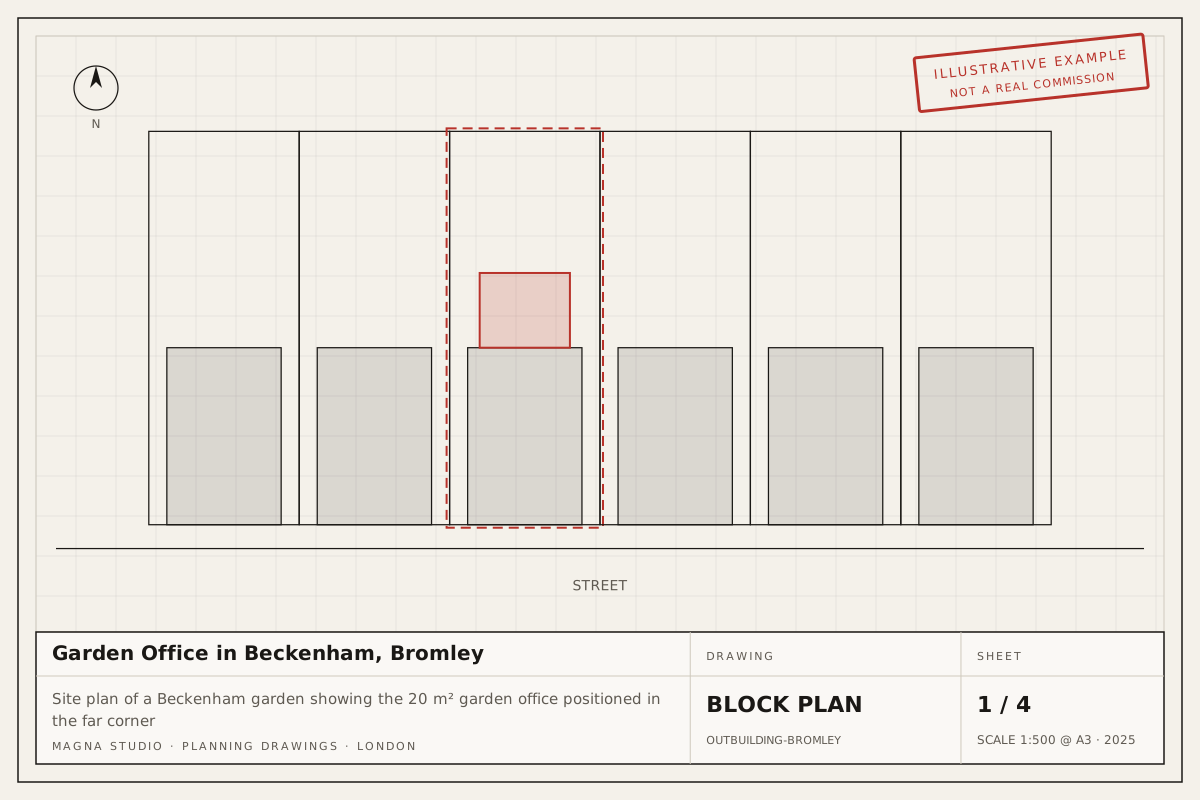
Site plan of a Beckenham garden showing the 20 m² garden office positioned in the far cornerExample project
Outbuilding / garden roomBeckenham, Bromley

Garden Office in Beckenham, Bromley

Insulated 20 m² garden office with a 2.5 m high flat roof, placed within 2 m of the rear and side boundaries of a suburban garden in Beckenham, Bromley.

Typical route: Permitted development under Class E, proved with a Lawful Development Certificate

04Questions

Planning questions we hear in Greenwich

Do I need planning permission for a rear extension in Greenwich?

Outside conservation areas, a single-storey rear extension up to 3 m on a terrace or semi is usually permitted development, or up to 6 m via prior approval (42 days). In West Greenwich, Blackheath, Westcombe Park and other conservation areas, and for all flats, a planning application is normally needed.

Can I extend a house on the Progress Estate in Eltham?

Yes, but the Progress Estate is a conservation area with an Article 4 direction, so almost any external change needs planning permission. Modest rear extensions in matching render and tile are achievable; front alterations, replacement windows and roof extensions are judged strictly against the estate's guidance.

Can I convert my loft under permitted development in Greenwich?

On an interwar semi in Eltham, Mottingham or Kidbrooke outside a conservation area, usually yes: a hip-to-gable and rear dormer within 50 m³ is typically lawful. On Victorian terraces in Charlton or Plumstead the 40 m³ limit applies. Conservation areas need permission. We recommend a Lawful Development Certificate.

How long does Greenwich council take to decide a householder application?

The statutory period is 8 weeks from validation, and 8 weeks for a Lawful Development Certificate. Royal Greenwich frequently agrees an extension of time, so we advise allowing 10–14 weeks, longer where heritage consultees are involved.

Does the World Heritage Site affect my extension in Greenwich?

If you are in Greenwich town centre, West Greenwich or the edge of Blackheath, you may be inside the Maritime Greenwich World Heritage Site or its buffer zone. It does not stop extensions, but officers will look closely at anything visible from the park, the river or key views, and heritage statements carry more weight.

Next step

Planning a project in Greenwich?

Answer six questions and your indicative fee for Greenwich arrives on screen and by email in two minutes, with a written fixed-fee quote within 24 hours.